How to test a name before you commit
By Domain Yoga · Last updated July 19, 2026
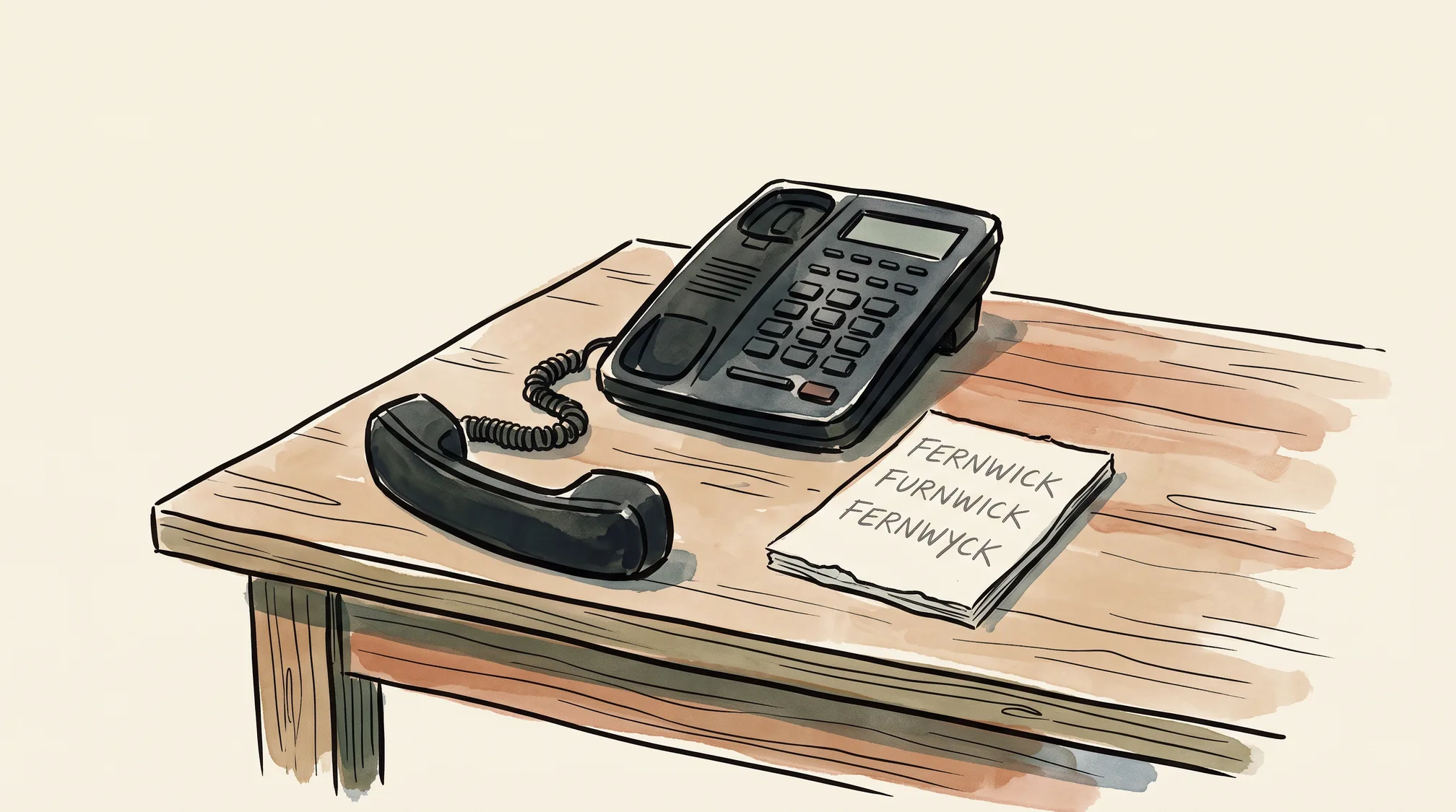
You test a name by putting it through the situations it will actually live in — spoken on a call, typed into a browser, searched by a stranger, registered as a domain and a handle — before you spend money or emotional capital on it. The principle: a name isn’t validated by how much you like it; it’s validated by how well it survives contact with people who have never seen it written down. Every check below takes minutes, costs nothing, and catches the failure modes that are expensive to discover after launch. If you’re still generating candidates rather than testing one, start with the full process in how to name a startup and come back here with a shortlist.
Does it pass the radio test?
The radio test is the oldest and still the best filter: if someone hears the name once, can they find you? Run it literally.
- Say the name in a phone call or voice message — no screen sharing, no spelling it out — and ask the other person to text you the name as they’d type it into a browser.
- Do this with three or four people. If two of them spell it differently, you have a radio-test failure.
- Watch for the classic traps: soundalike letters (c/k, f/ph), silent letters, doubled consonants, and invented spellings like “Lyft” that only work once a brand has spent millions teaching people the trick.
A name that fails the radio test isn’t automatically dead — plenty of successful companies fail it — but you should fail it knowingly, and only if your growth won’t depend on word of mouth, podcasts, or people recommending you out loud.
What does the search test tell you?
Before you commit, search the name the way a stranger would. You’re checking two things: crowding and ambiguity.
- Crowding: search the exact name and the name plus your category (“Acme invoicing”). If page one is full of established companies, dictionary results, or a popular product in an adjacent space, you’ll spend years fighting for your own name.
- Ambiguity: does the name already mean something? A common word, a place, a person, a meme, a product in another country? You don’t need a unique string of letters, but you do need a realistic path to owning the results for “name + category.”
- Check app stores and GitHub too if you’re a software product — a collision there confuses users even when Google is clear.
The honest read: a generic dictionary word with heavy competition is a harder road than a slightly invented name nobody else uses. The search test is where “nice name” and “findable name” part ways.
Can people say it and type it without stumbling?
This is the say-it-out-loud and typo test, and it’s different from the radio test: here you’re the one saying it, over and over, checking whether the name is comfortable to use.
- Say it in real sentences ten times: “Hi, I’m from ___.” “Check out .” ” support, how can I help?” If you hesitate or over-articulate, customers will too.
- Type the domain fast, five times, on a phone keyboard. Note every typo you make — those are the typos your users will make daily.
- Read it in lowercase as one string. Compound names hide surprises when the spaces disappear; check the letters at the seam of every word boundary.
- Check the obvious adjacent typos: swapped letters, missing letters, and the singular/plural version. If a one-character typo lands on someone else’s site, that’s traffic you’ll leak forever.
Is the name available where you need it?
Availability isn’t just “is the .com taken.” Make a short list of the places the name must exist, then check them all in one sitting:
- The domain, in the TLD that fits your brand — .com if your audience expects it, or a modern TLD like .app, .dev, or .io if that reads better for you. Check the .com’s status either way: if it’s parked with a five-figure price, decide now whether you can live beside it.
- One or two defensive variants — common misspellings or the .com alongside your primary — but don’t buy twelve domains out of anxiety.
- Social handles on the two or three platforms you’ll actually use, not all of them. Consistent handles matter; complete ones don’t.
If the exact name is taken everywhere, that’s your answer — not an invitation to append “HQ,” “app,” and “get” until something sticks. A clean name on a modern TLD usually beats a mangled name on .com.
Does it clear a basic trademark check?
You’re not doing legal work here; you’re doing a collision check to avoid obvious disasters.
- Search the trademark database for your country or region (USPTO, EUIPO) for the exact name and close variants in your industry’s class.
- Search “name + lawsuit” and “name + trademark” for skeletons.
- The bar: would a reasonable customer confuse you with an existing business in a similar space? Identical name, different industry is often fine; similar name, same industry is a red flag.
If anything looks borderline, read up on the basics before you register — trademark basics covers what actually matters at this stage — and talk to a lawyer before you print anything. A name you have to surrender after launch is the most expensive naming mistake there is.
Should you sleep on it before you decide?
Yes — the cheapest test is time. A name that feels electric at midnight often feels ordinary on Thursday. The lightweight version:
- Sit on your top choice for 48 hours without saying it to anyone. If you’re still reaching for it, good sign.
- Show it to five people who match your audience — not your cofounder, not your mom. Say the name once, then ask: what do you think we do? How would you spell it? Would you say it to a friend?
- Ignore whether they like it. Likability is noise; comprehension and recall are signal. If four out of five can spell it and roughly guess the category a day later, ship it.
No name passes every test perfectly. The goal is to know exactly which trade-offs you’re accepting — a radio-test miss here, a crowded search term there — instead of discovering them after the logo is on stickers. If your current candidate failed more checks than you’re comfortable with, Domain Yoga will generate fresh, available alternatives in seconds, so testing a new name costs you minutes rather than a restart.