The most common words in YC startup names
By Domain Yoga · Last updated August 8, 2026
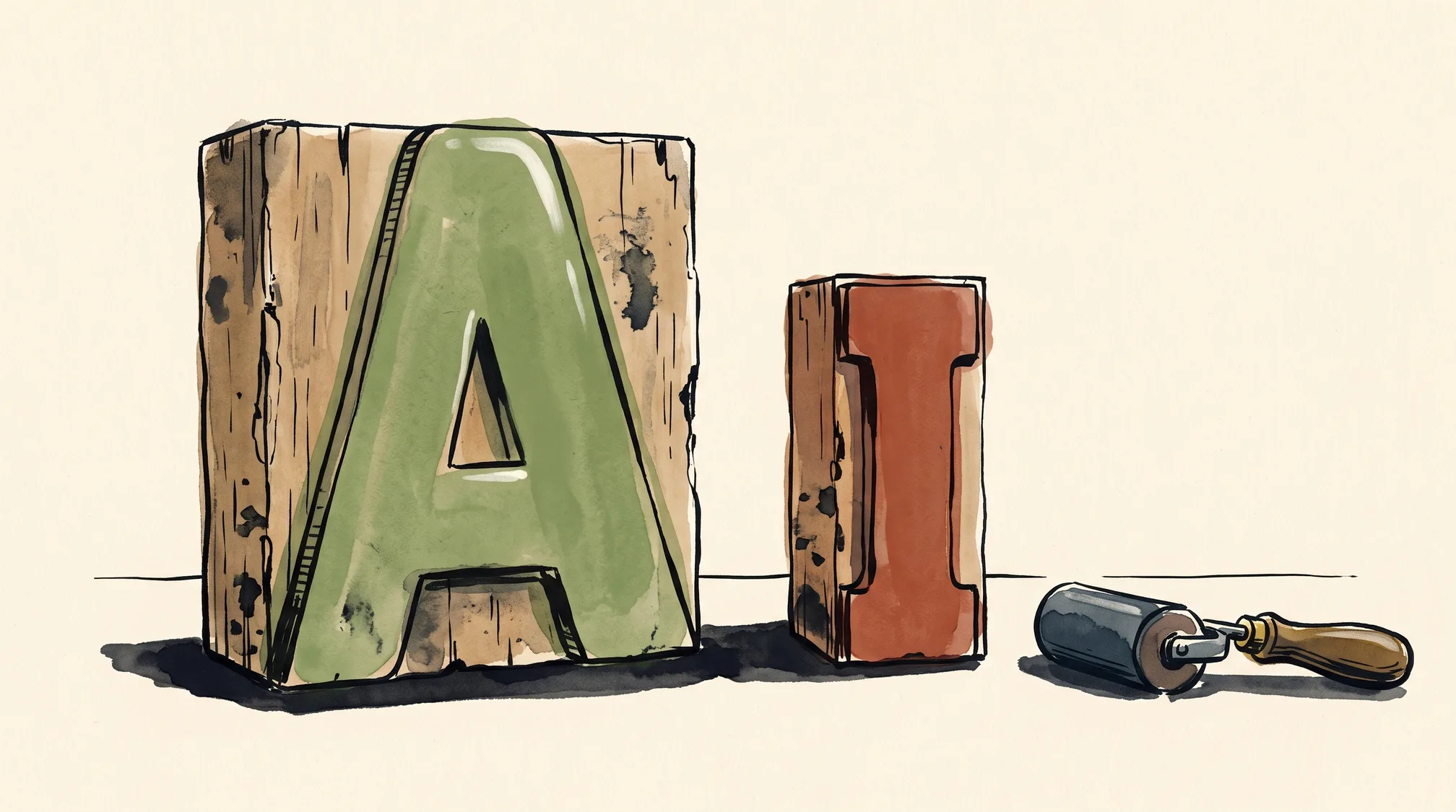
The most common word in Y Combinator startup names is “AI” — it appears in 286 companies, 4.8% of the 5,955 unique names we analyzed from YC’s public directory (a July 2026 snapshot of roughly 6,057 companies, deduplicated by name, with words counted after splitting CamelCase compounds). No other content word comes close: “health” is second at 2.1%, “labs” third at 2.0%. But the more useful finding sits underneath the leaderboard. YC names are short — the median is eight characters — and more than three-quarters are written as a single word. The signature naming move at the world’s most-watched accelerator isn’t a keyword at all; it’s a short, brandable coinage.
How did “AI” become the number-one name word?
Almost entirely in the last decade. “AI” appears in zero YC company names before the 2014 batches, where it debuts in just 2 of 151 companies (1.3%) — the era of Wit.ai and PicnicAI. From there it climbs sharply, if unevenly: 3.7% of the 2020 batch, 5.8% in 2022, 7.6% in 2023, and 10.3% of the 2024 batch — one company in ten. It held near that peak at 9.4% in 2025. (The 2026 batches sit at 6.1% in our snapshot, but they’re only partially populated, so we wouldn’t read a decline into that yet.)
The names themselves trace the arc: Wit.ai and People.ai baked the letters into a domain hack, while later companies wear them as a plain suffix — Scale AI, Standard AI, Percept.AI, Tara AI. Which points at the catch: when a tenth of your batch shares a word, that word signals category, not distinctiveness. Whether the .ai extension itself is worth paying for is a separate question — but as a name ingredient, “AI” has gone from differentiator to background noise in about ten years.
What are the most common words overall?
After setting aside corporate boilerplate (more on that below), the top content words read like a map of what YC funds:
- “AI” — 286 companies (4.8%). The runaway leader.
- “Health” — 128 (2.1%). Noora Health, Lucira Health, Spire Health.
- “Labs” — 122 (2.0%). The default “we’re still exploring” surname.
- “Robotics” — 38 (0.6%) and “bio” — 36 (0.6%). Deep tech’s calling cards.
- “Open” — 25 (0.4%).
- “Pay,” “one,” “data,” “care” — 20 each (0.3%).
- “Flow” (19), “dev” (17), “code” (15) — each around 0.3%.
A note on the noise we filtered: raw counts also surface “Inc” (57 companies), “Technologies” (31), and “Company” (13) — legal boilerplate, not naming choices — plus “formerly” (17), a pure data artifact from directory entries written as “X (formerly Y).” We set those aside; the list above is the real signal.
The striking thing is how steep the drop-off is. Beyond “AI,” “health,” and “labs,” no word breaks 1%. YC founders aren’t converging on shared vocabulary — they’re converging on a shared shape.
What does a typical YC name actually look like?
Short, and usually one written word. The median name is 8 characters (mean 8.3, counting letters only). Of the 5,955 unique names, 4,573 — 76.8% — are a single word as written; 1,223 are two words, and only about 2.7% run to three or more.
The signature pattern is two parts, however they are written. Split the CamelCase and 2,099 names — about 35% — resolve into exactly two chunks. Some are smashed into one word: PlanGrid, SendHub, CircuitHub, WireOver, HireArt, SlidePay, LendUp. Others are the spaced pairs counted above — Able Health, Abalone Bio, 9 Mothers. Roughly a third of that 35% is the run-together form; the rest simply keep the space. The other big cluster is the coined or repurposed single word — Gusto, Rescale, Chute, Grouper, Couple — names that carry no category keyword at all and succeed on pure brandability: short, sayable, spellable after one hearing.
What endings do YC names favor?
Suffixes tell the same story from the other end:
- -ai — 288 names. Overlapping heavily with the “AI” word count above.
- -labs — 122.
- -io — 89. The echo of the .io domain-hack era.
- -ly — 71. Optimizely, Weebly, Strikingly, Embedly, Goldbelly.
- -flow — 36, -base — 21, -ify — 19. Smaller but recognizable house styles (we set aside ordinary English endings like -able, at 29, which are common for reasons unrelated to startup fashion).
Every one of these endings was a differentiator once. The pattern of this dataset is that popular endings decay into defaults — -ly in the 2010s, -ai now.
Where do these numbers come from?
One honest paragraph on method: the data is Y Combinator’s public company directory, pulled via the open-source yc-oss mirror of YC’s official API, snapshotted in July 2026 — 6,057 companies, deduplicated by name to 5,955. “Common” means the share of company names containing a word, counted once per company, case-insensitive, after splitting CamelCase compounds (so “PlanGrid” counts toward both “plan” and “grid”). Three limits worth stating: corporate boilerplate and the “formerly” artifact are excluded from the content-word rankings; these are company names, not domains — related but not identical, even when the name embeds one (Wit.ai, People.ai), though we later measured the domains themselves across the same directory; and the 2026 batches are only partially in the snapshot, so the trend line is clean through 2025 and provisional after.
What should a founder take from this?
The durable YC formula is short plus brandable — not keyword-stuffed. Across two decades of batches, the two moves that persist are the coined single word (Gusto, Rescale) and the two-real-words compound (PlanGrid, SendHub). Category words, by contrast, run in fashions: “AI” has spiked from nothing to one name in ten in a decade, and a name that leans on that spike inherits its decay. Tack “AI” onto your name today and you blend into roughly one in ten companies of your own batch — the naming equivalent of a beige rectangle.
That’s the practical argument for choosing distinctive over descriptive, and for treating naming as its own deliberate step rather than an afterthought — our guide to naming a startup walks through that process end to end.
If you want to start from the shape the data favors — short, brandable, and actually available — Domain Yoga generates exactly those: concise names with live domain-availability checks, so the good ones you find are ones you can register.
The same exercise on a different population gives a usefully different answer: what Product Hunt launch names have in common looks at products at launch rather than companies at funding.