What Product Hunt launch names have in common
By Domain Yoga · Last updated July 28, 2026
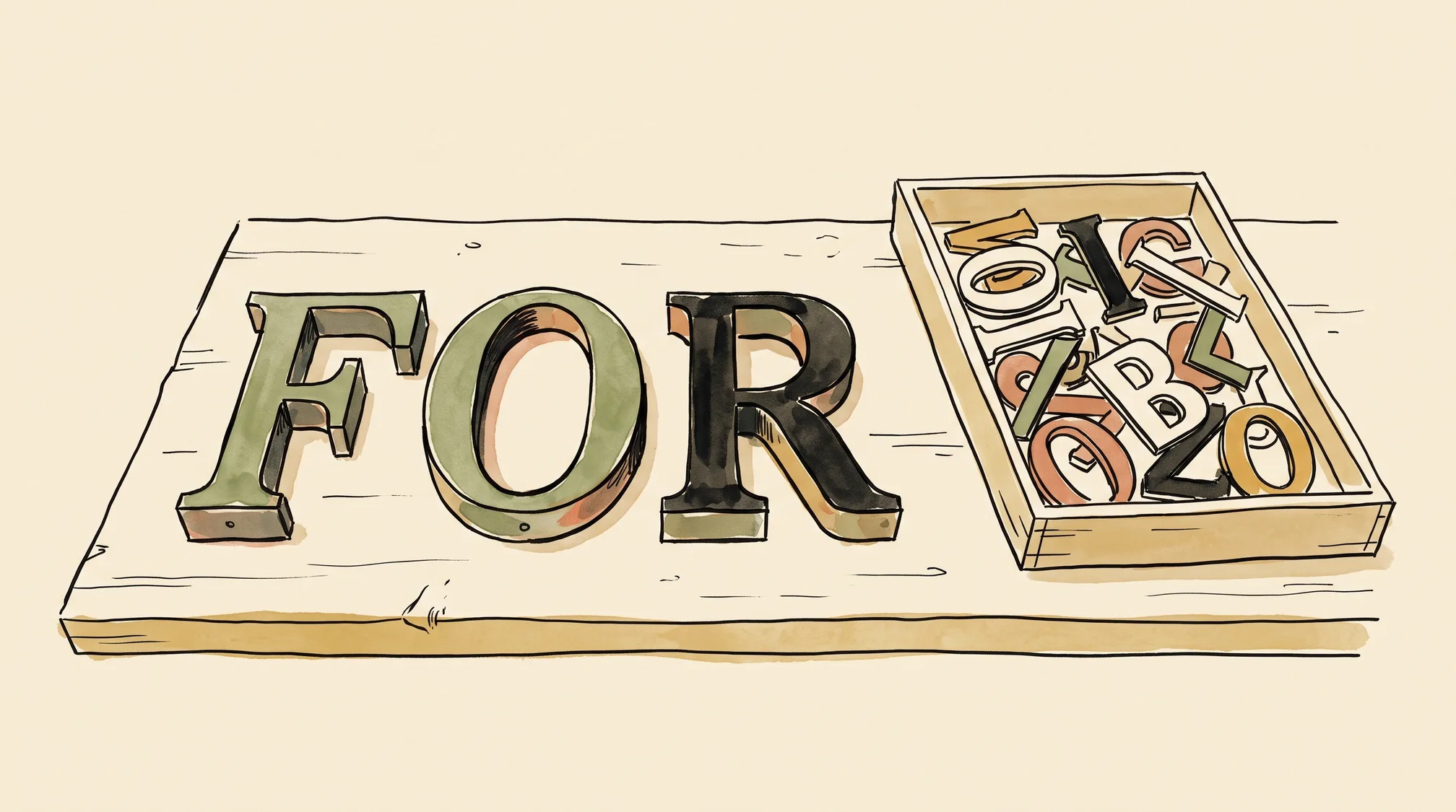
The most common word in Product Hunt launch names is “for” — as in “OneBar for Helpdesk” — appearing in 1,308 of the 31,672 unique names we analyzed — 4.1% — from January 2020 through December 2022 (a Kaggle mirror of the full daily launch feed: 32,571 launches, deduplicated by name, with words counted after splitting CamelCase). Two scope notes belong up front: this study covers 2020–2022 only, and it ends in December 2022 — right before the ChatGPT-era AI-naming wave broke, so the AI trend you’ll see here is the pre-boom ramp, not the explosion. Even inside that window the data tells a story startup directories don’t: Product Hunt names are longer and wordier than startup brand names — median 10 characters, and only 48.6% are a single word — because a PH “name” is really a launch title. And the most common content word, already climbing fast before the boom, is “AI.”
Why is “for” the number-one word?
Because makers launch with titles, not just brands. The top of the leaderboard is connective tissue:
- “for” — 1,308 names (4.1%). “Airtable Web Clipper for Chrome,” “WAVE Meditation for Kids,” “Osiris Browser for iOS.”
- “by” — 1,212 (3.8%). “Insights by Octane AI.”
- “the” — 692 (2.2%).
- “AI” — 556 (1.8%). The first real content word.
- “app” — 483 (1.5%).
This is a finding, not just noise. The “[Product] for [audience]” and “[Thing] by [Maker]” conventions are so entrenched that prepositions outrank every product word on the site. On launch day, people describe — the bare brand comes second.
How fast was “AI” climbing before the boom?
It nearly tripled inside this pre-boom window. “AI” appears in 94 names in 2020 (1.0%), 178 in 2021 (1.4%), and 284 in 2022 (2.8%). Count taglines too and AI intent goes 2.9% → 3.7% → 6.3% across the same three years. Remember: this series stops in December 2022, just as the curve was accelerating — everything since is off-camera here.
The names themselves show the styles of the era: ReclaimAI, Outsell.ai, AI Image Enlarger, Obviously AI AutoML — and, true to the launch-title habit, longer ones like Fireflies AI assistant for Zoom meetings. Whether you should pay for the .ai extension itself is a separate question, but as a name ingredient, “AI” was already the most common content word on Product Hunt before ChatGPT existed.
What do the other content words say?
They map the indie-maker toolbox. After “AI,” the leaderboard reads like a stack trace of what people were building: “code” (246 names), “generator” (183), “api” (182), “kit” (179), “web” (174), “video” (154), “design” (153), “ui” (151), “hub” (148), “bot” (143), “tracker” (134), “no” — as in no-code — (130), “chat” (129), and “nft” (125). (We set aside platform and version tokens like “os” and “pro,” which rank higher but describe a format, not a category.)
Platform names rank surprisingly high. “Notion” appears in 280 names — more than any content word except “AI” — with “Figma” at 137 and “Google” at 134. Big ecosystems spawn launches: “Reports for Notion,” “Notion E-Commerce UI Kit.” Building on someone else’s platform means borrowing their name for your title.
How do launch names compare with startup brand names?
Product Hunt names are measurably wordier. The median launch name runs 10 characters (mean 11.8), and only 15,401 of the 31,672 — 48.6% — are a single word as written. 7,389 are two words, 4,784 are three, and 4,098 run to four or more.
Contrast that with our companion study of the most common words in YC startup names: YC company names run a median of 8 characters and 76.8% are single words. The gap isn’t because PH makers name differently — it’s because they’re naming a different thing. A YC directory entry is a brand; a Product Hunt entry is a launch title, and titles carry descriptors that brands shed.
Which endings show up most?
The suffix fashions are all here. Setting aside the ordinary English -er ending (2,047 names, common for reasons unrelated to startup style), the recognizable house styles are:
- -io — 519 names.
- -ly — 394. Subly, Storyly, Vectorly, Mixily.
- -ai — 388.
- -ify — 234. Presentify, Focusify, Hoverify.
- -hub — 105 and -flow — 104.
The same endings dominate the YC data, in different proportions — evidence that these are naming fashions of the era, not quirks of one community.
Where do these numbers come from — and what are the limits?
One honest paragraph on method: the source is the Kaggle undefinenull/product-hunt comprehensive daily feed — every Product Hunt launch, every day, from 2020 through 2022 — downloaded in July 2026. That’s 32,571 launch entries, deduplicated by name to 31,672 unique launch names (the dedup collapsed roughly 900 relaunches); per year, that’s 9,020 unique names in 2020, 12,460 in 2021, and 10,192 in 2022 (a relaunched name is credited to the year it first appeared, which if anything understates later-year growth). “Common” means the share of unique names containing a word, counted once per name, case-insensitive, after splitting CamelCase. The limits: this is the launch feed, not upvotes or rank, so it is not a “best products” list; these are launch titles as products list them, not always the bare brand; and a handful of emoji- or number-only titles explain why the minimum name length is 0 characters.
What’s next: the full top-10-since-2013 cut
This snapshot stops at the end of 2022 — which means it catches only the beginning of the AI-naming surge. We’re planning a follow-up that uses Product Hunt’s official API to analyze the daily top 10 from PH’s 2013 launch through today. That cut will capture the full post-2022 AI explosion and let us track naming trends across Product Hunt’s entire history. No date promises, but this page will point to it when it ships.
What should a founder take from this?
Product Hunt names split into two species, and both are legitimate — they just do different jobs. The descriptive launch title (“X for Y”) helps you get discovered in the feed on launch day, which is the same logic as naming for validation: say what it is, get the click. But the names that survive after launch day — as a product, a domain, a company — are the short brandable ones: Confetti, Dropover, Dwell, PopKit, Timeless. The YC data points the same way: the durable move is short plus brandable, not keyword-stacked.
If it’s the second species you’re hunting — short, brandable, and actually registrable — Domain Yoga generates exactly those: concise name ideas with live domain-availability checks, so the ones you like are ones you can own.